
Guides for teams running A/B tests, improving conversion rates, and building a repeatable experimentation program with lightweight, marketer-friendly tooling.
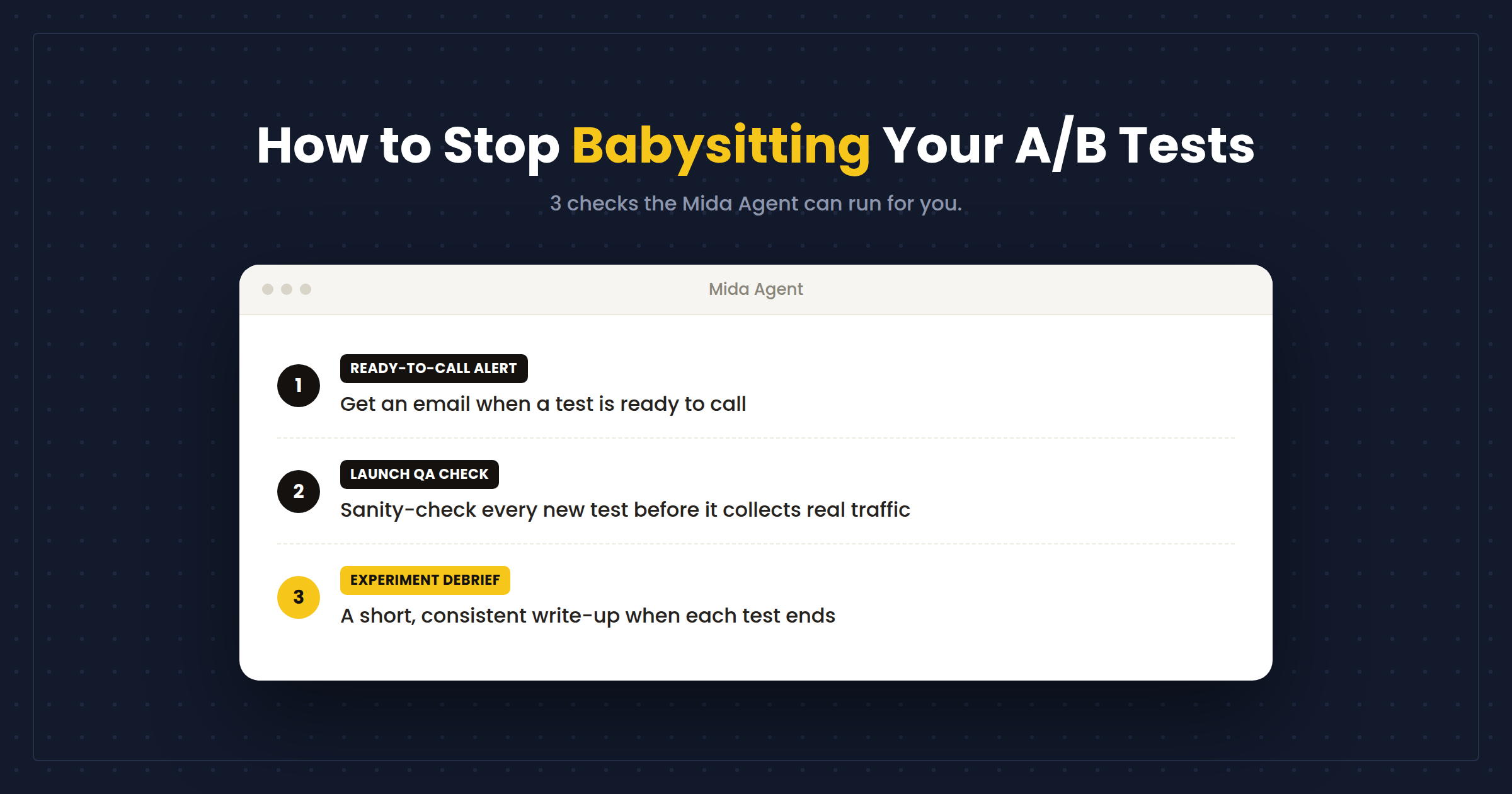
The Mida Agent is an AI teammate inside the Mida app. Routines put it on a schedule; Workflows fire it on an event. Three checks worth handing over first: the ready-to-call alert, the launch QA check, and the experiment debrief.
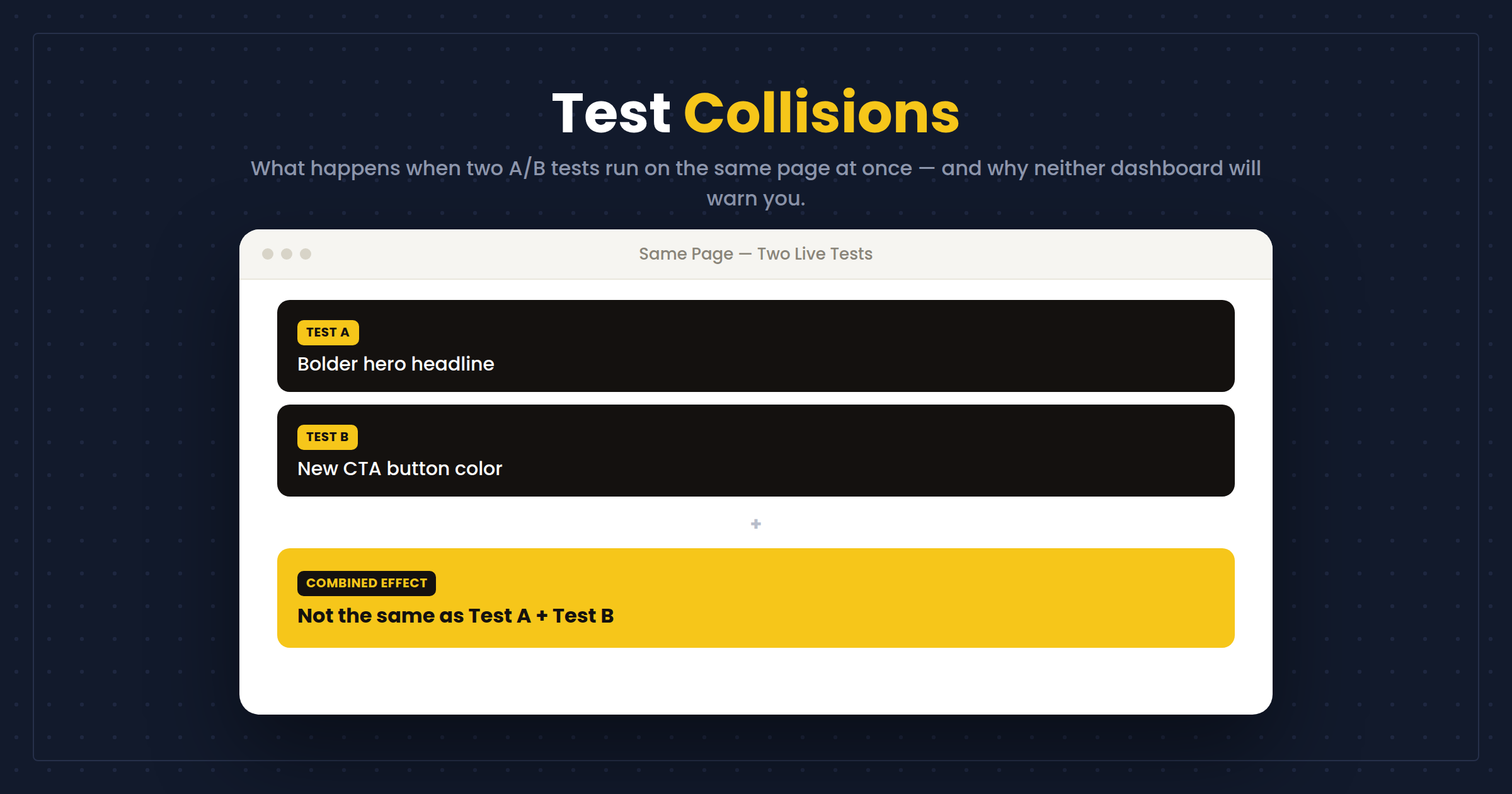
When two experiments touch the same users, page, or flow at the same time, their effects don't simply add. Both tests can quietly read out results that are wrong, and neither will throw an error. Here's what collisions actually are, why the 2–4 concurrent test ceiling matters, and how to detect and prevent them without Bing's infrastructure.
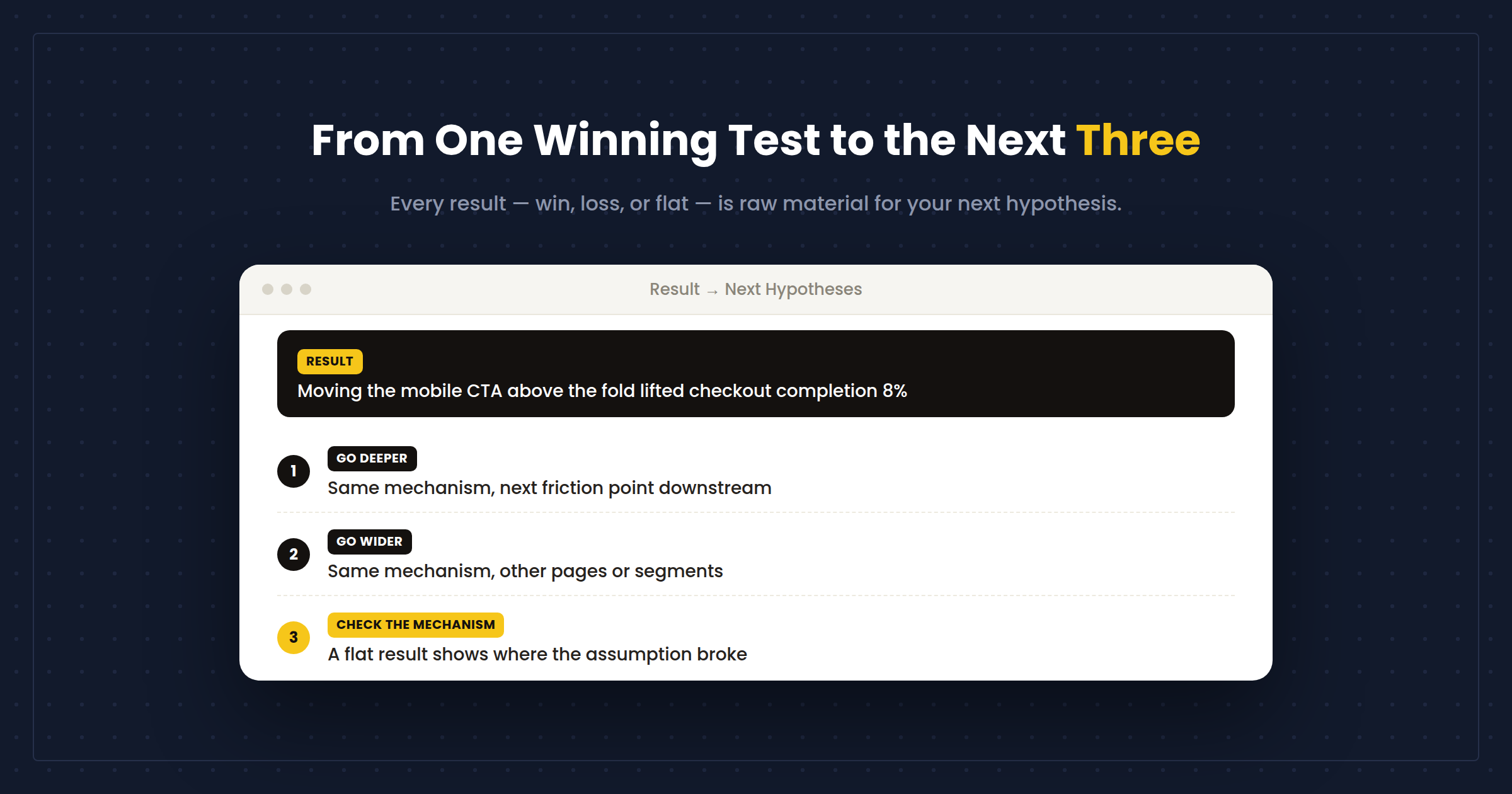
Most testing backlogs run dry because teams treat a shipped test as a closed ticket instead of the raw material for the next hypothesis. Every result — win, loss, or flat — hands you at least three next tests if you take thirty seconds to extract them.
The Mida Agent is an AI teammate inside the Mida app. Routines put it on a schedule; Workflows fire it on an event. Three checks worth handing over first: the ready-to-call alert, the launch QA check, and the experiment debrief.
When two experiments touch the same users, page, or flow at the same time, their effects don't simply add. Both tests can quietly read out results that are wrong, and neither will throw an error. Here's what collisions actually are, why the 2–4 concurrent test ceiling matters, and how to detect and prevent them without Bing's infrastructure.
Most testing backlogs run dry because teams treat a shipped test as a closed ticket instead of the raw material for the next hypothesis. Every result — win, loss, or flat — hands you at least three next tests if you take thirty seconds to extract them.
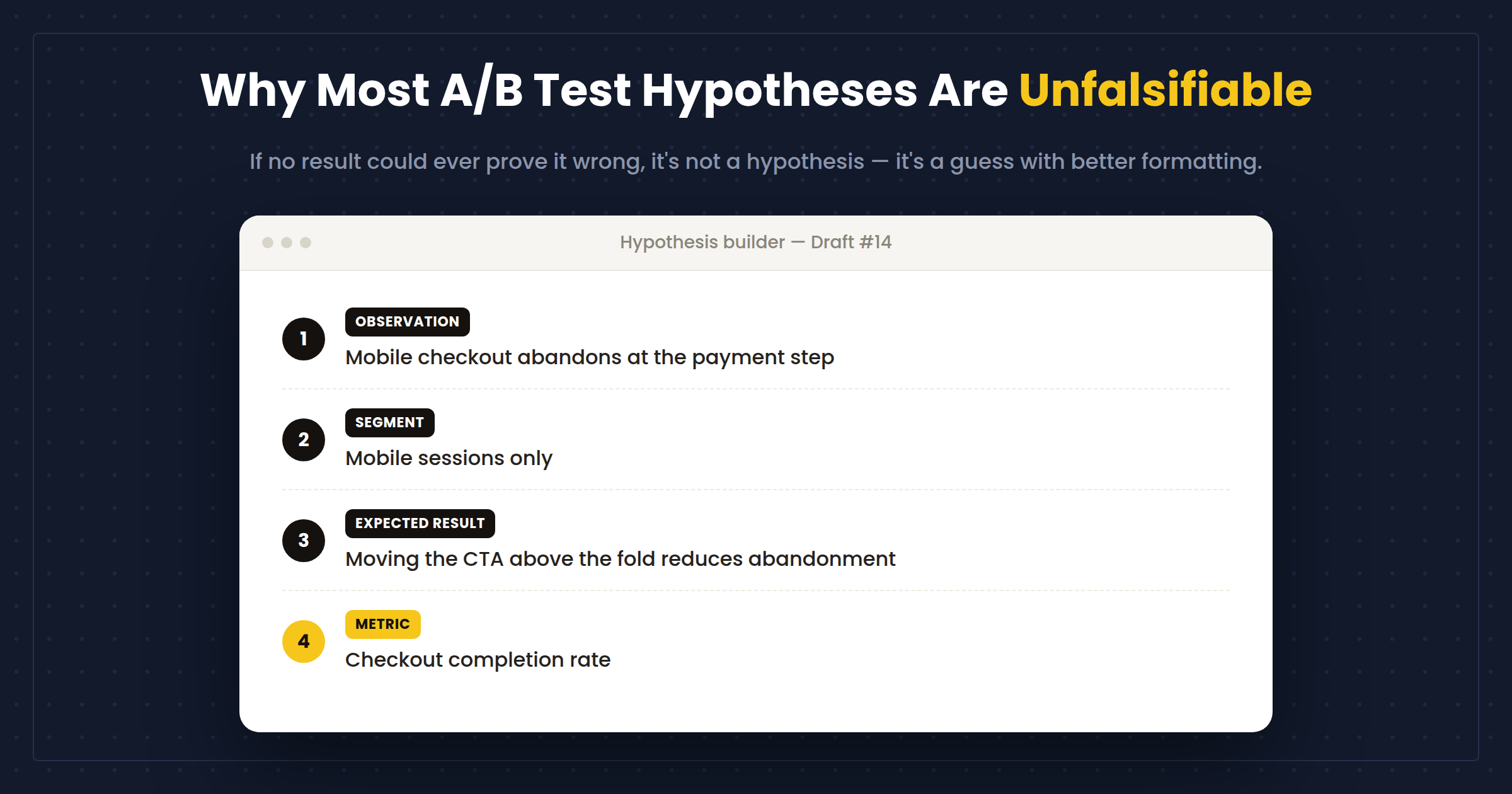
Most A/B test hypotheses aren't badly written — they're built in a way no result could contradict. Here's what falsifiable means for a test, the four things a real hypothesis needs, and a one-sentence gut check to run before you open the test editor.
Segmenting and fragmenting can look identical from the outside. The difference is whether you decided on the cut before you saw the data and whether that slice had the traffic to earn its own read. Here's how to tell them apart, the sample-size bar each segment has to clear, and a quick self-check before you split a test.
AI hypothesis tools compress the work of turning analytics + heatmaps + best practice into a testable brief. When to trust them, when to override, and how to fold them into your workflow without losing the human context they can't see.
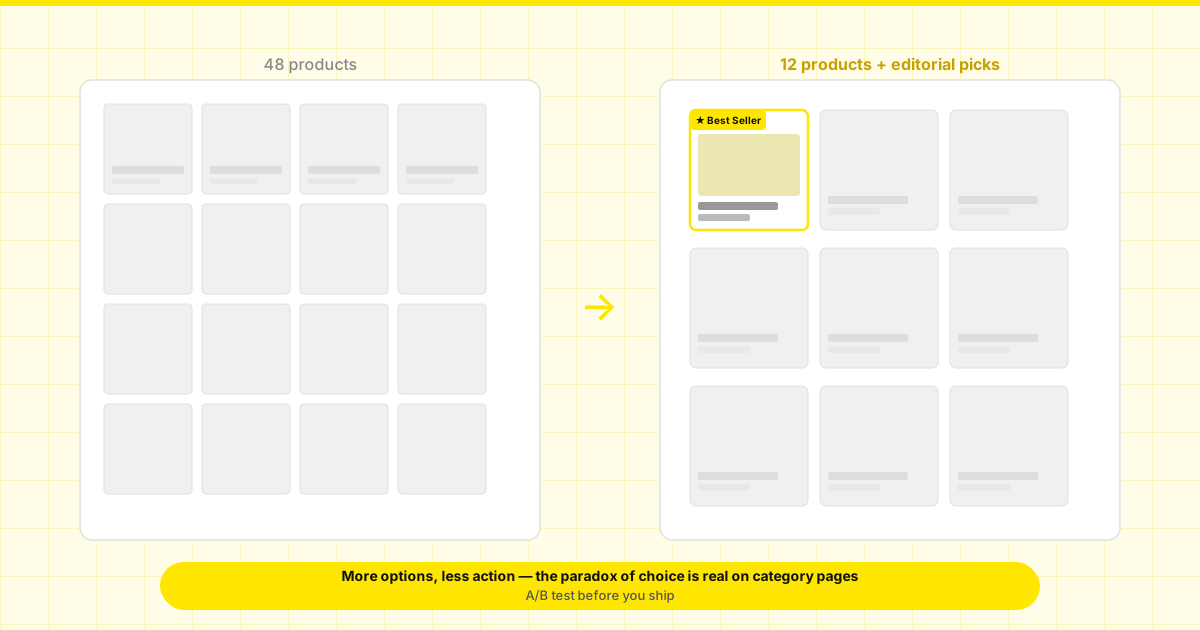
Iyengar & Lepper's jam study showed 6 options converted 10× better than 24. Five A/B tests — reduced counts, social-proof default sort, staff picks, prominent filters, richer cards — that cut choice overload on category pages.
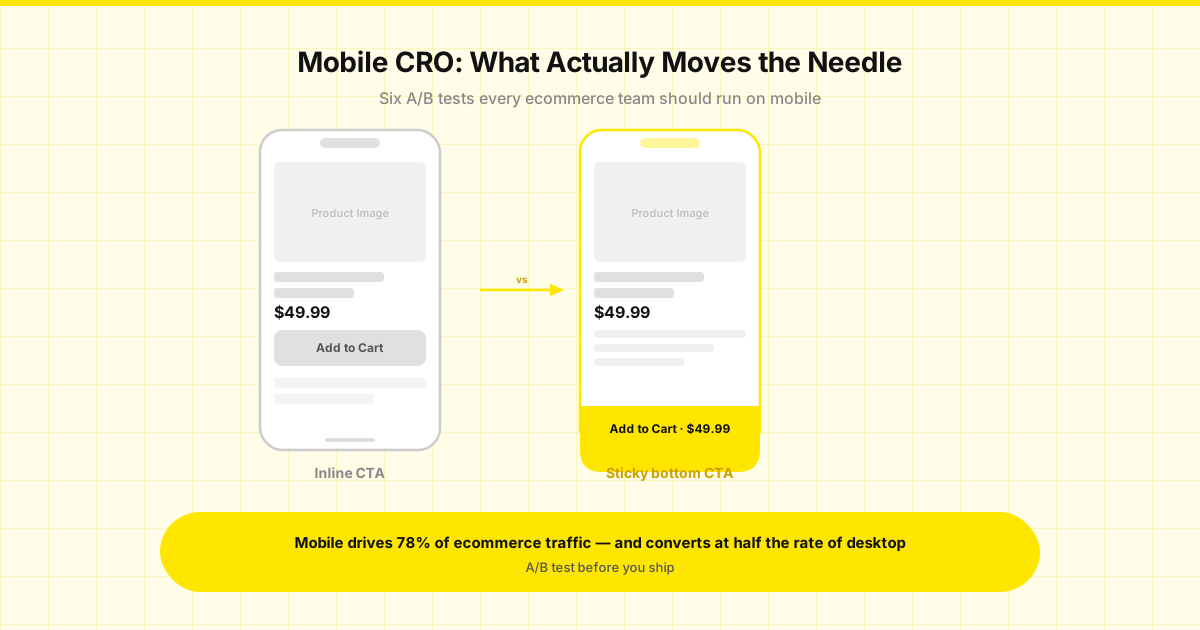
Mobile drives ~70–78% of ecommerce traffic but converts at roughly half the desktop rate. Five A/B tests — sticky CTA, one-field checkout, swipeable gallery, autofill, and above-the-fold trust — that close the structural gap.
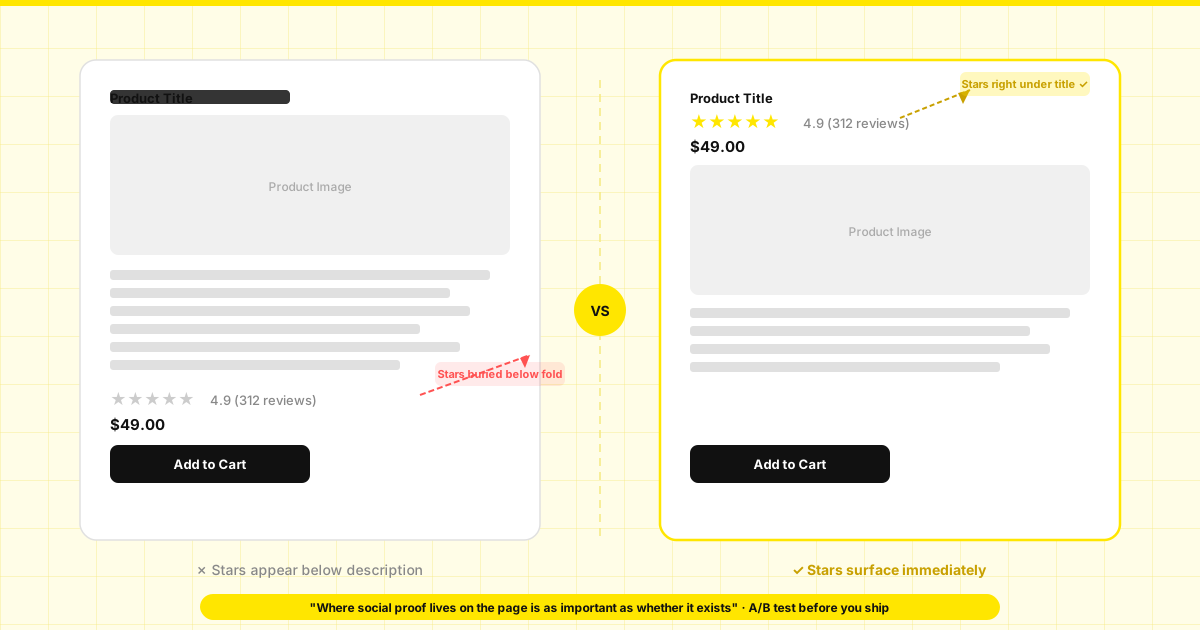
Where you put social proof on a product page matters as much as whether it exists. Five A/B tests — star position, review count near the CTA, verified badges, format type, and UGC surfacing — to find the highest-impact placement.
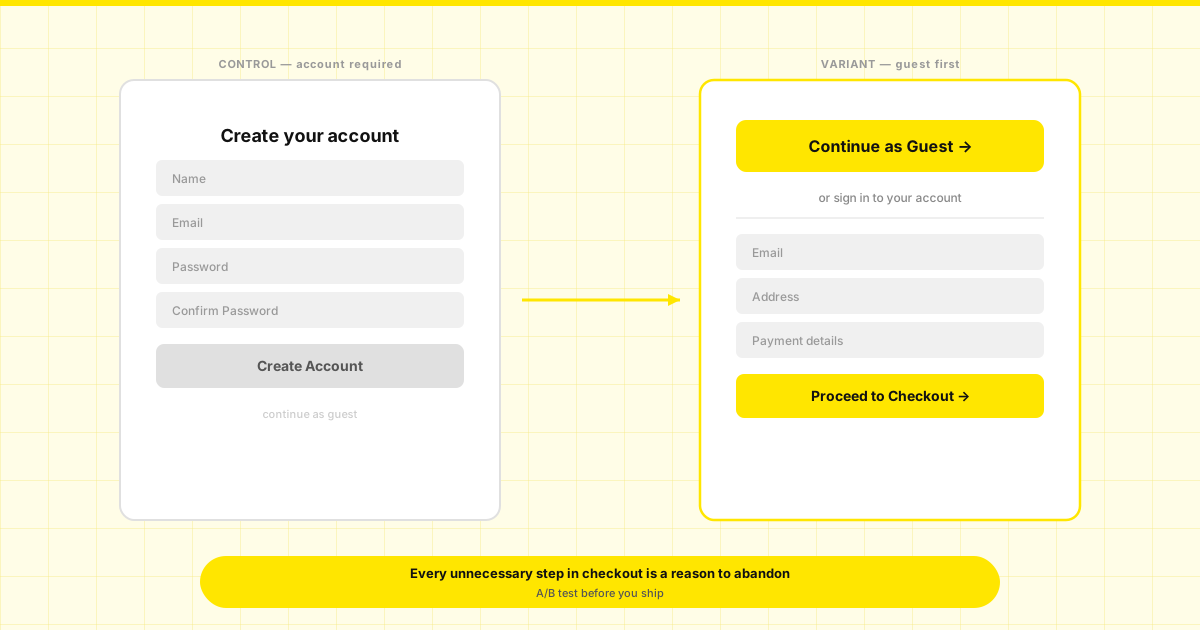
Baymard Institute puts cart abandonment above 70% — mostly caused by preventable checkout friction. Five A/B tests to fix guest checkout, shipping cost surprise, form length, payment logo visibility, and progress indicators.
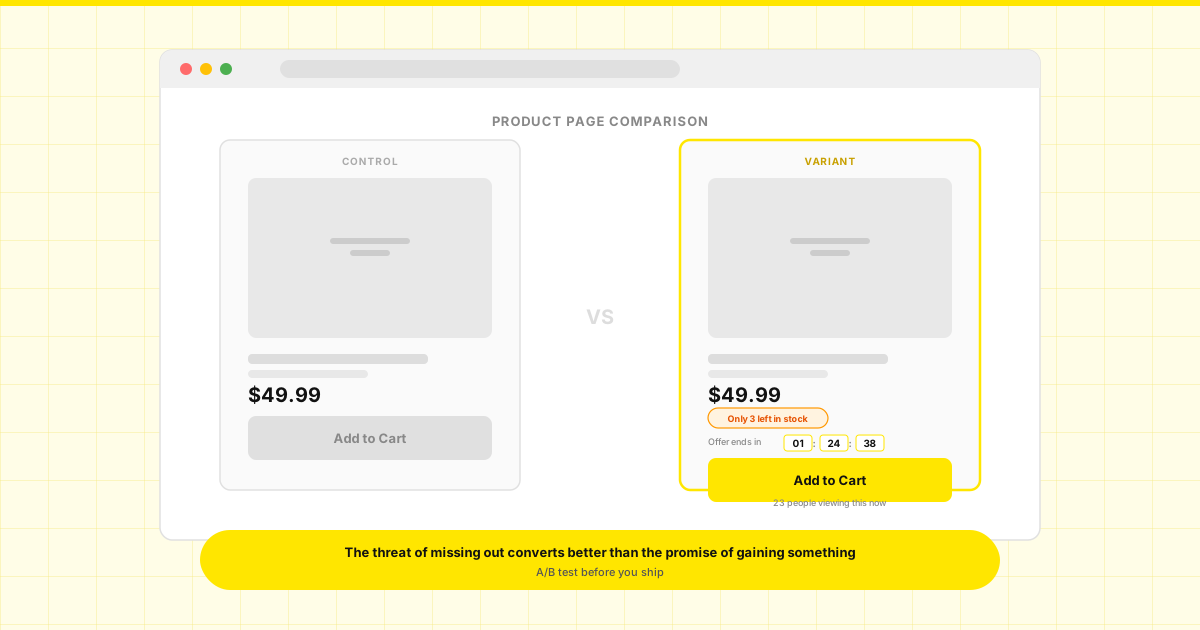
Loss aversion makes the pain of missing out twice as strong as the pleasure of gaining. Five product-page A/B tests — low-stock badges, countdowns, social viewing, back-in-stock framing, out-of-stock handling — that surface real scarcity.
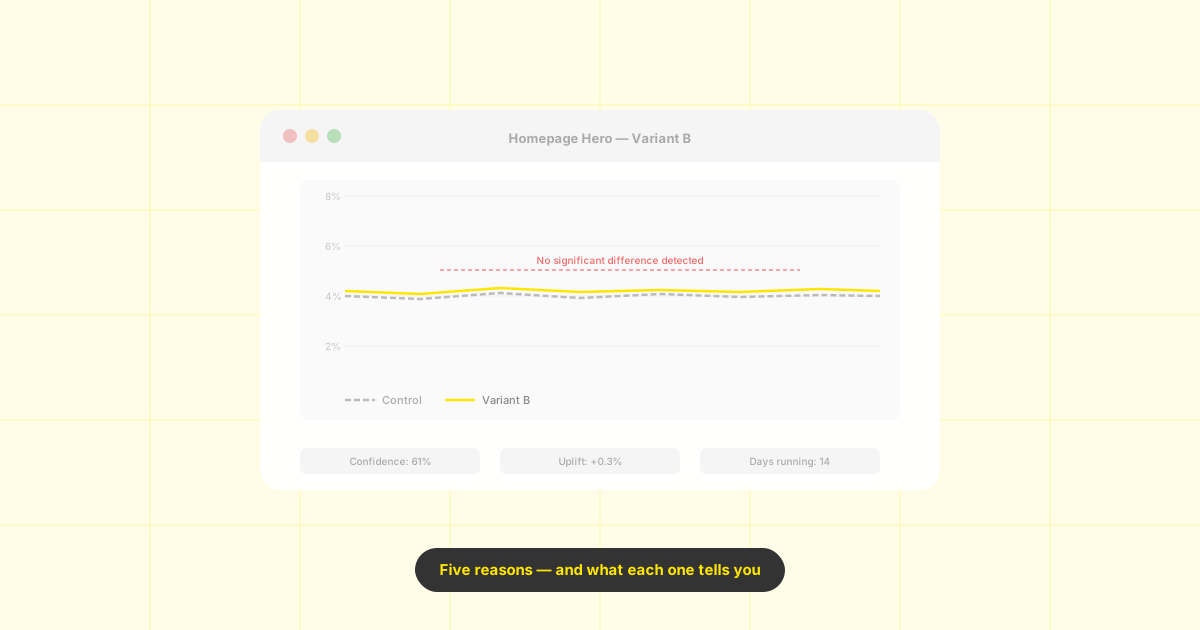
Flat A/B test results are the most common outcome and the most misdiagnosed. Five common causes — insufficient traffic, cosmetic changes, wrong page, too many changes, and mid-test contamination — and how to tell which one you're looking at.
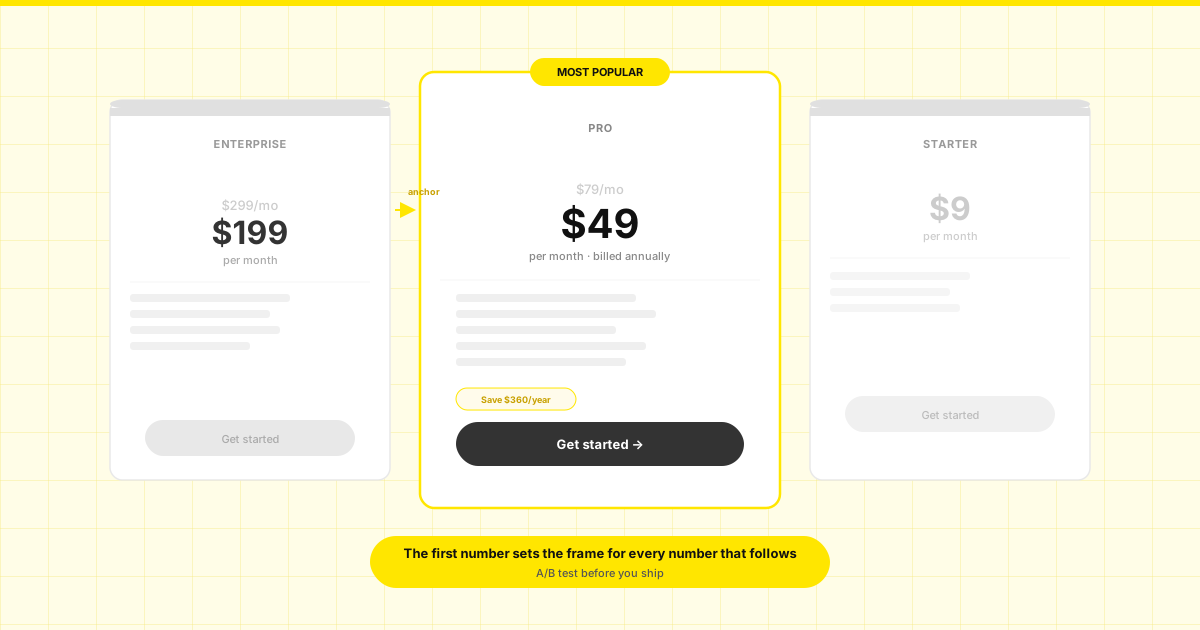
Anchoring bias makes the first number on your pricing page set the frame for every other. Five A/B tests — tier order, struck-through prices, annual pre-select, per-day framing, decoy tier — to reshape the frame.
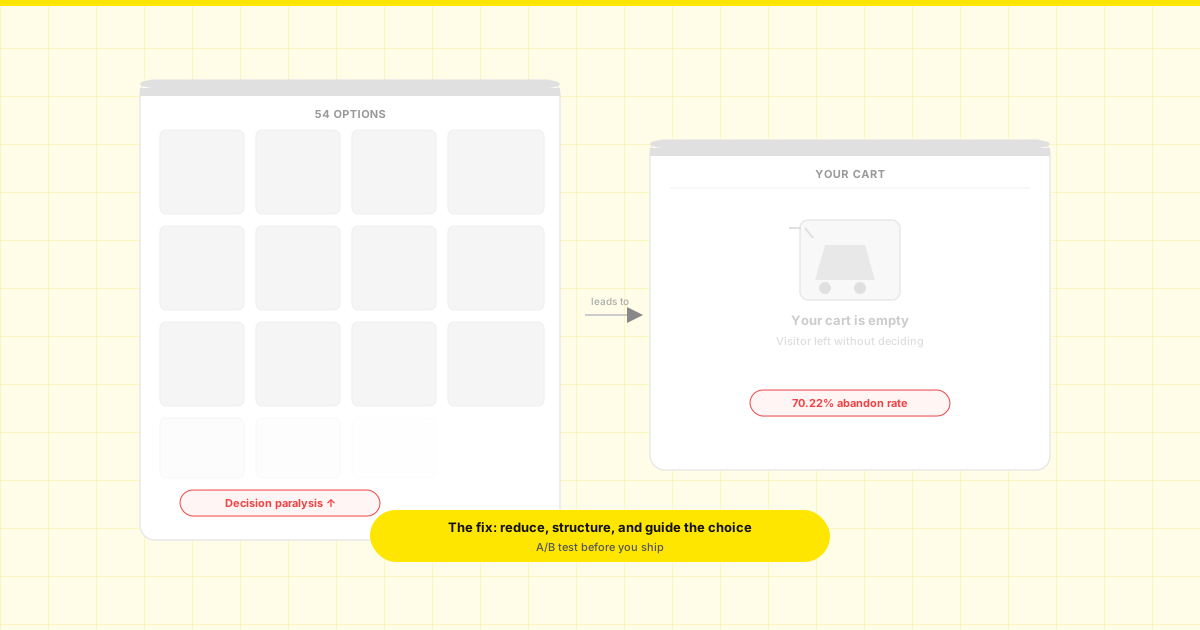
Comparison fatigue is the cognitive ceiling that ends sessions before checkout. Five A/B tests — fewer options, progressive disclosure, comparison tools, social proof, recommendation prompts — to address it.
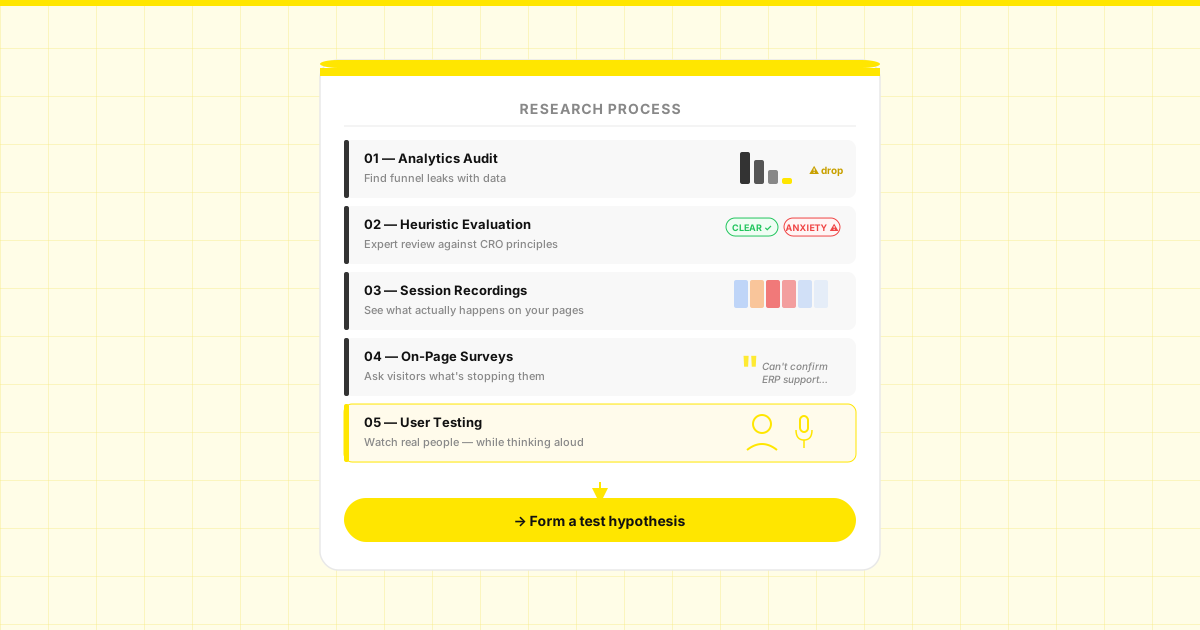
CRO research is the work that happens before the test. Five core methods — analytics, heuristics, recordings, surveys, user testing — and how to turn observations into hypotheses.
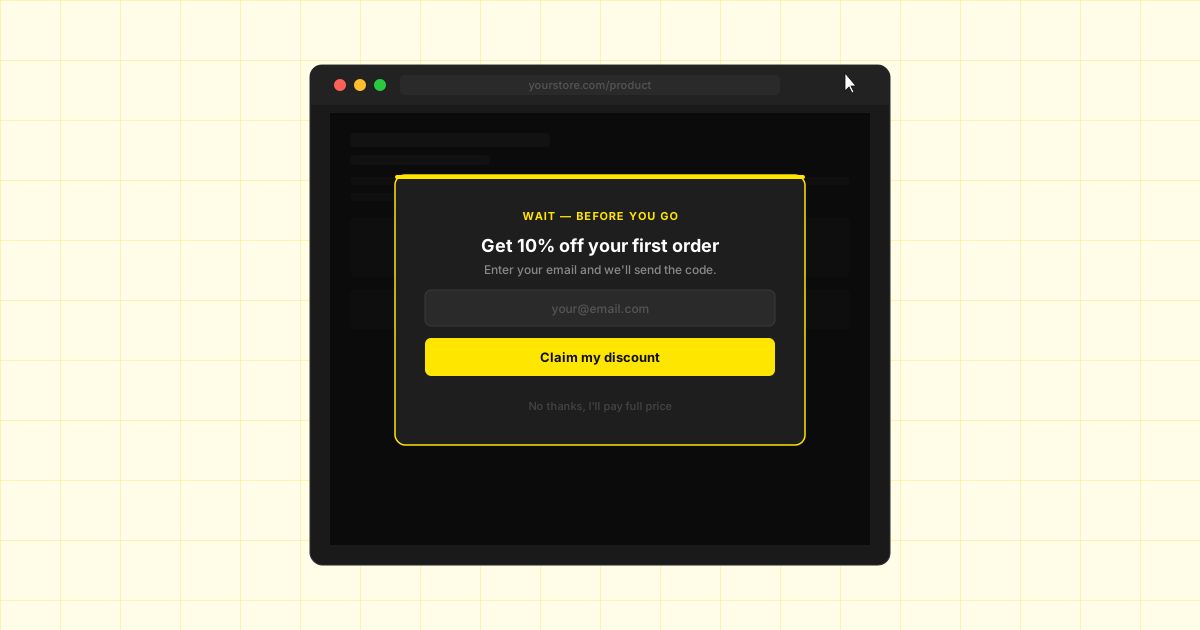
Exit intent popups recover high-intent visitors, not confused ones. Test the page first — scroll depth, click maps, CTA copy, social proof — before adding a popup.
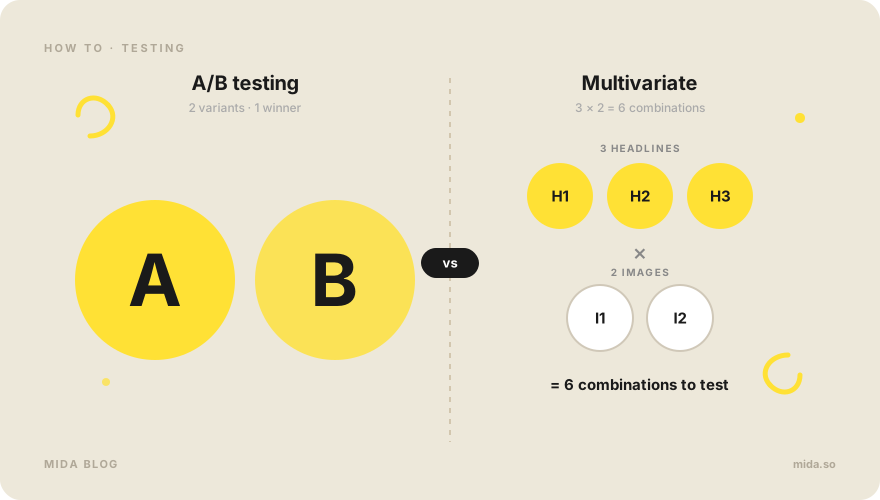
A/B testing isolates one change; multivariate testing measures combinations of many. Use A/B for clarity and speed; use MVT only when you have the traffic and a mature program.
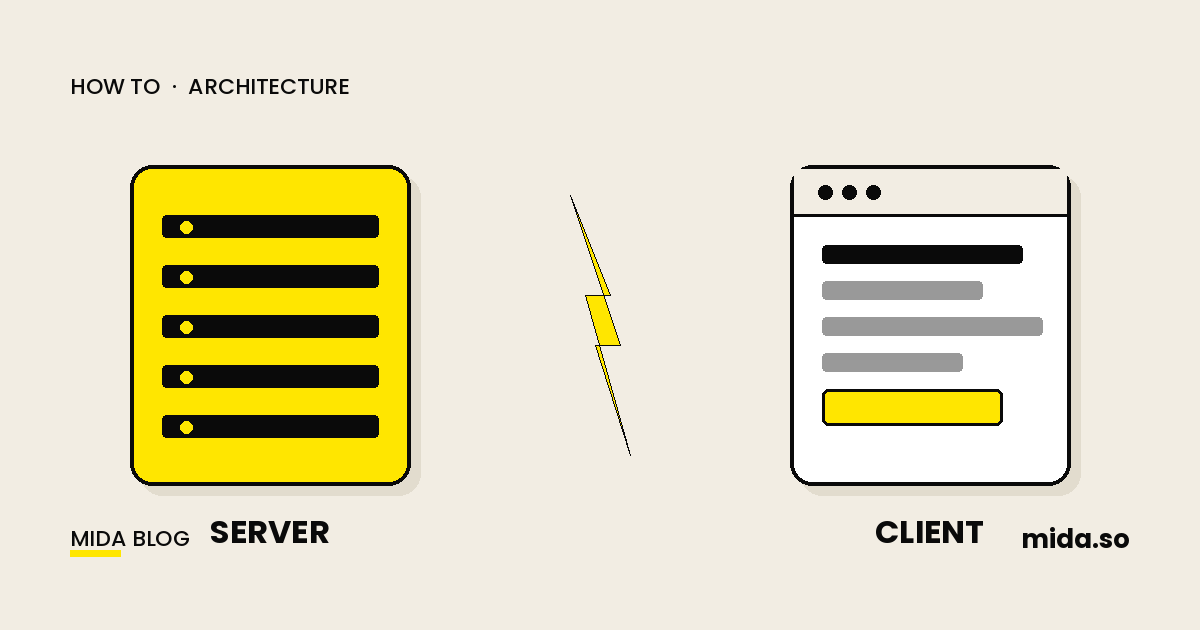
When to use server-side vs client-side A/B testing — and the hybrid setup most mature teams actually run. Trade-offs, decision matrix, and where Mida fits.
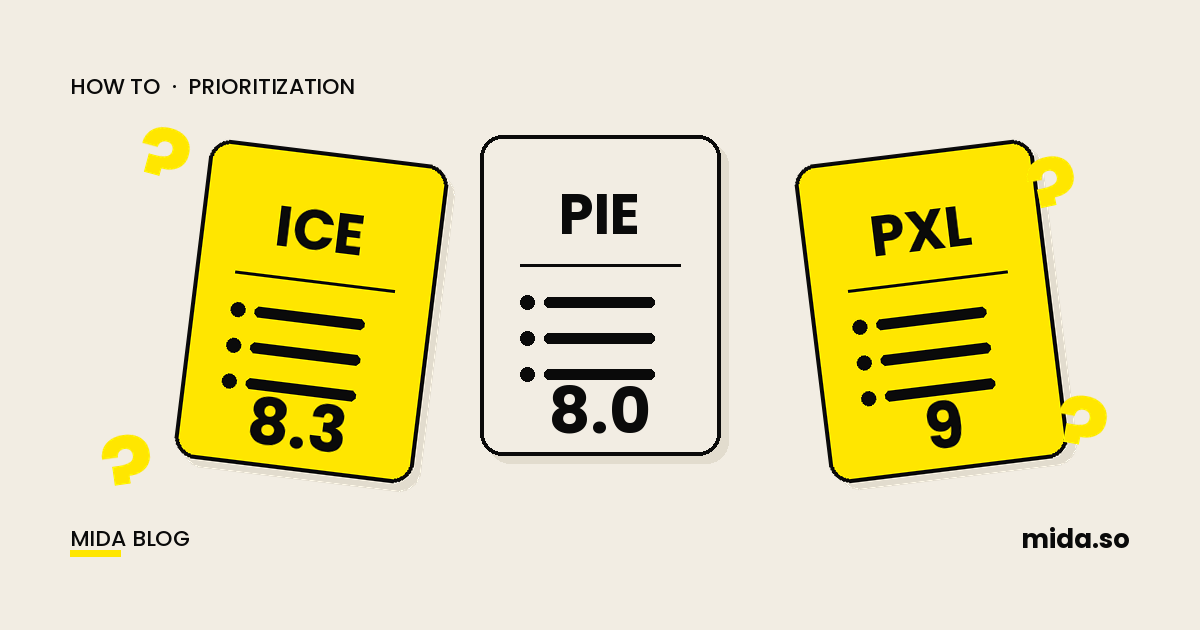
Compare ICE, PIE, and PXL test prioritization frameworks. Worked example scores the same five ideas through all three — then steal the hybrid that fits most teams.
Losing A/B tests contain signals winning tests don't. Use a structured 5-step framework to extract learnings and sharpen your next hypothesis.
GA4's user counts are probabilistic estimates — not exact counts — and you can't turn this off. At scale, this flaw can flip experiment outcomes and corrupt your A/B test decisions. Here's why, and what to do instead.

Yes — you can A/B test page variations without ever changing the URL. Client-side testing tools inject variant changes directly into the DOM so every visitor lands on the same address while seeing a different experience.
Optimise eCommerce images by converting to WebP/AVIF, compressing below 200KB, writing keyword-rich alt text, enabling lazy loading, and using a CDN to serve images fast.
Deploying website changes without A/B testing can quietly hurt conversion because design opinions do not prove customer behavior.
Most A/B tests fail because of these 7 common mistakes. Learn how to avoid false positives, peeking, and underpowered experiments so your split tests actually drive revenue.
A/B testing can be GDPR compliant, but it depends on what data your testing tool collects and whether you rely on legitimate interest or explicit consent. This guide breaks down exactly what you need to do.
Pricing pages respond to structural and psychological tests — plan count, billing default, anchoring, and specific social proof — not button colour tweaks.
PostHog for Marketers: Beyond Product Teams is a comparison question: the best choice depends on whether you need marketer-friendly A/B testing, deep.
ChatGPT can generate test hypotheses, write variant copy, and help analyze results — but can't run the test. Learn the prompts and workflow to use AI in your A/B testing process.
Below-the-fold A/B tests need scroll depth data and adequate sample sizes to be valid. Learn how to set them up, pick the right metric, and avoid false positives.
9 real A/B test examples across headlines, CTAs, pricing pages, and checkout — with the hypothesis, variant, and result for each to inspire your next experiment.
The p-value tells you how likely your A/B test result is due to chance. Learn how to calculate it, which thresholds to use, and the most common p-value interpretation mistakes.
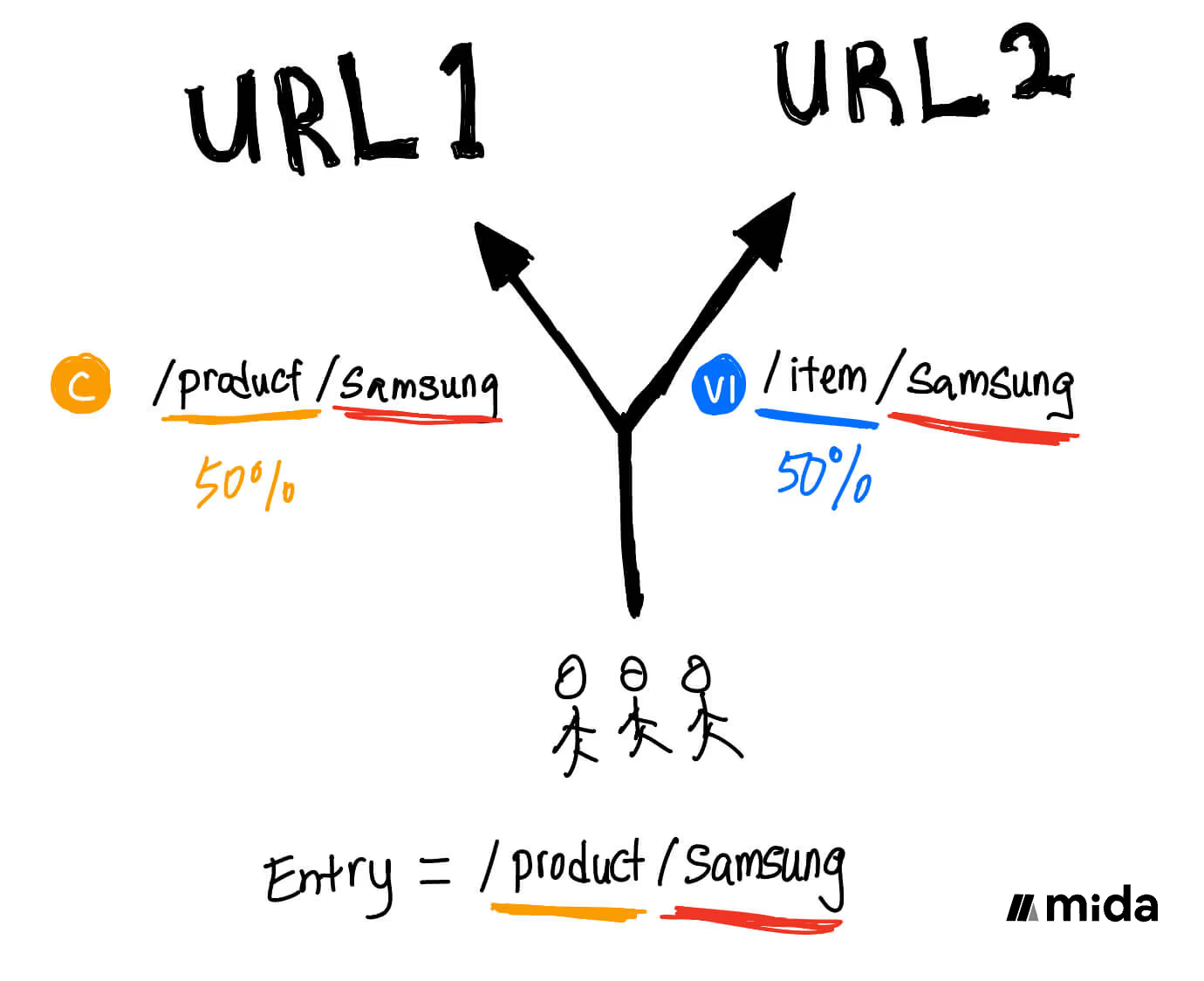
Learn how to run A/B tests on dynamic URLs — product pages, filtered categories, paginated results — using wildcard patterns and redirect tests. Covers setup, SEO best practices, common mistakes, and FAQs.
Ecommerce optimization improves product pages, checkout, offers, and site speed so online stores can increase conversions and revenue.

E-Commerce Strategy: Updated Guide with Examples is mainly about reducing purchase friction and validating changes with measured experiments.
Pricing experiments test plan anchoring, billing toggles, and offer framing — not just price points. Learn how to structure and run your first pricing test safely in 2026.
Early reviews are the hardest to get. Learn the outreach sequences, timing, and ask strategies startups use to collect their first reviews on G2, Capterra, and Google.
How to Calculate Power Statistics for A/B Testing? depends on baseline conversion rate, expected lift, and traffic volume.
How to Increase Power Statistics in A/B Testing? depends on baseline conversion rate, expected lift, and traffic volume.

How to measure return on investment on your SEO efforts comes down to clean implementation: A/B testing should not harm SEO when search engines see a.

Marginal cost is the cost to produce one more unit. Learn the formula, see worked examples, and understand how it affects pricing and profitability.
How to A/B Testing Shopify Pricing (Tutorial) is mainly about reducing purchase friction and validating changes with measured experiments.
Redesigning without data risks killing what already works. Learn the step-by-step process — from analytics audit to launch — that uses A/B testing to protect existing conversions.
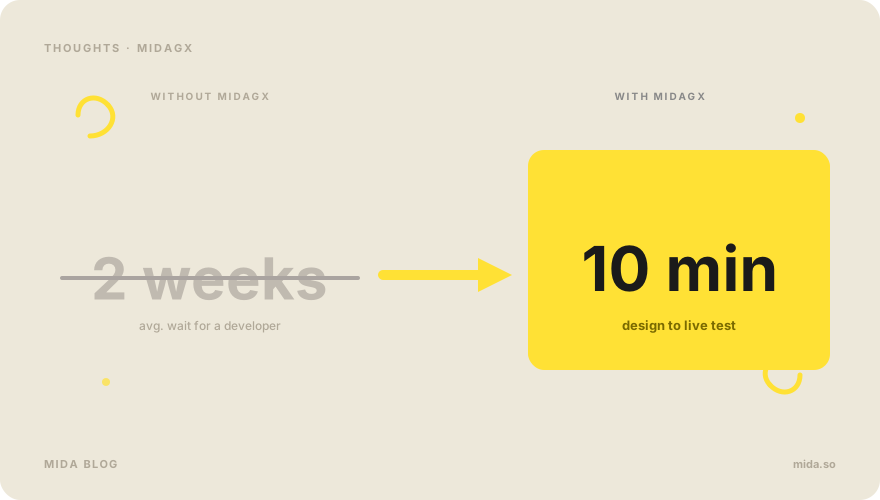
MidaGX turns a Figma link into a live A/B test in minutes — no dev handoff. Plus a plain-English option for teams without Figma.
Model Context Protocol (MCP) lets AI assistants take real actions in external tools — not just generate text. For marketers, it means AI can now create A/B tests, push website changes, and query analytics without waiting for a developer. Here is what is actually happening and why it matters.
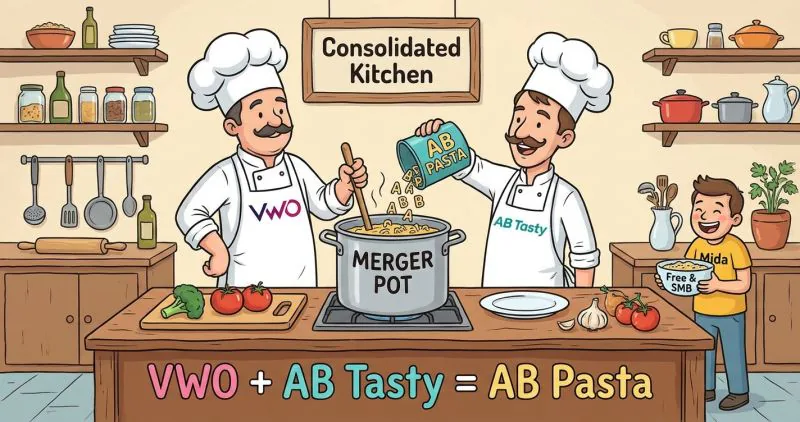
VWO and AB Tasty merged under Everstone Capital in January 2026, creating an enterprise-focused platform. SMBs and teams needing self-serve experimentation should evaluate independent alternatives.
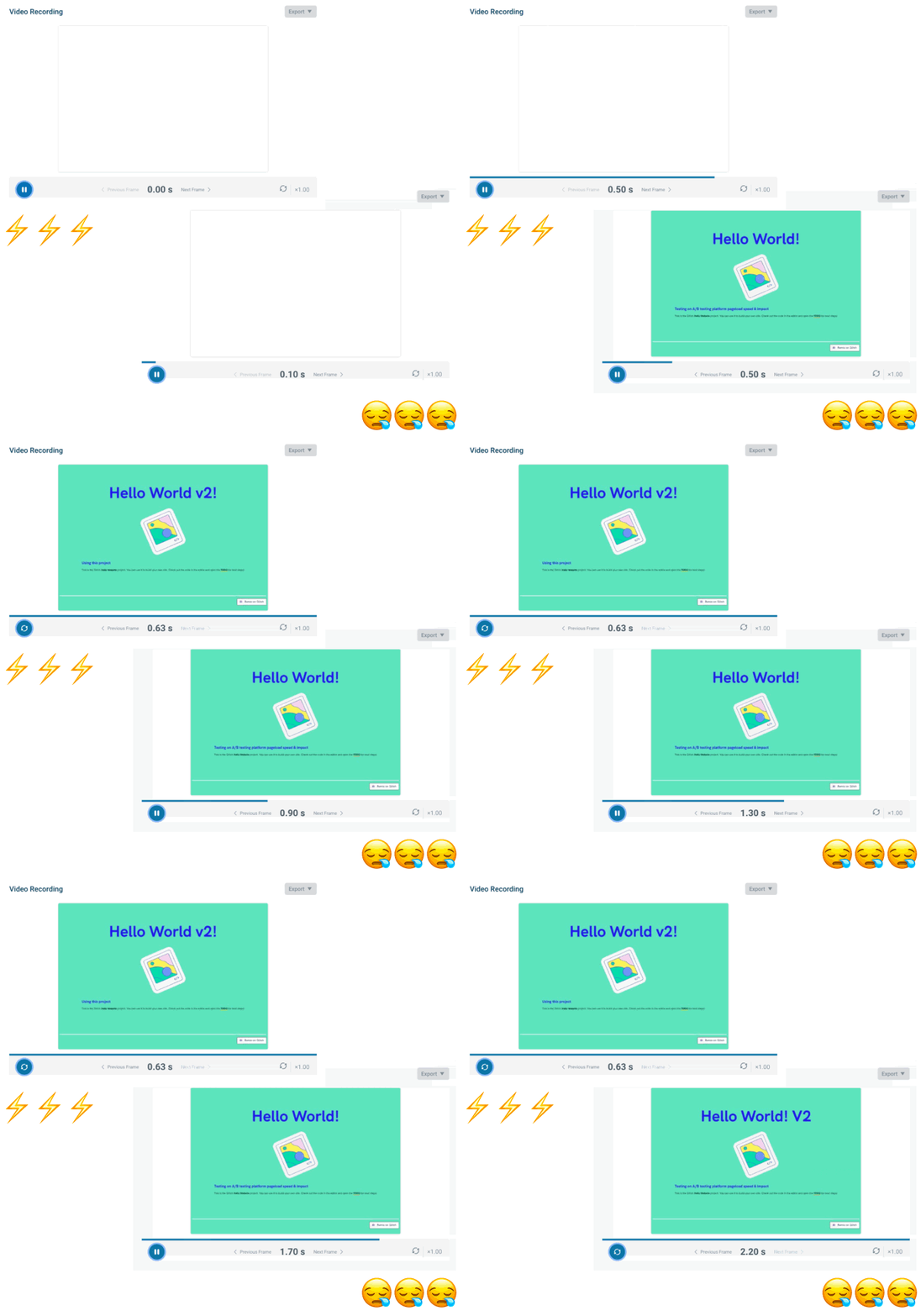
We benchmarked script load times of major A/B testing tools on identical pages. See which add 50ms vs 500ms+ of render-blocking latency — and what that costs in conversion rate.

Script weight and render-blocking time determine how much your A/B testing tool slows your site. See how Mida, Optimizely, VWO, and AB Tasty compare in real speed benchmarks.
jQuery adds ~87 KB that delays page rendering. Learn why it's slow, how it compares to vanilla JS and modern alternatives, and what changed in jQuery 4.

How to know if A/B testing scripts are slowing down your website? is about comparing controlled variations so teams can make website decisions from.
Honest VWO review for 2026: covers CLS issues, slow variation loading, opaque pricing, and sales friction. Includes when to choose Mida instead.
Why A/B Testing Is the Missing Infrastructure Layer for LLM Products is mainly about reducing purchase friction and validating changes with measured.
Most teams hate A/B testing because tests run too long, never reach significance, or get ignored. Here's what's actually broken about how teams experiment — and how to fix it.
An experimentation ecosystem is the people, process, and tooling that turns test ideas into reliable decisions. Learn how to build or scale a culture of testing in your organization.
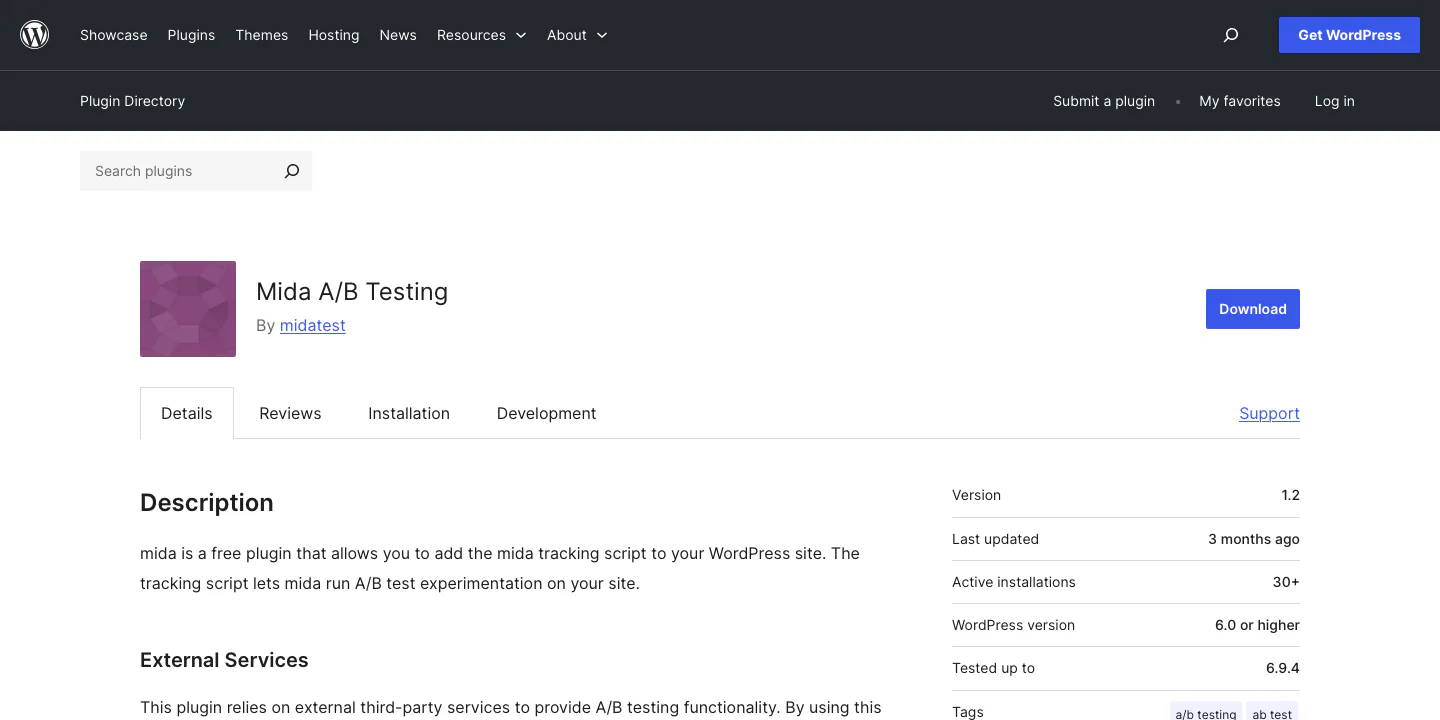
Compare the 7 best A/B testing tools for WordPress in 2026 — from lightweight scripts with official plugins to WordPress-native testing tools — by performance impact, ease of use, WooCommerce support, and pricing.
Compare the top website personalization tools for 2026 — from free no-code options for lean SaaS teams to enterprise AI-driven platforms. Includes pricing, use cases, a buyer's guide, and a full FAQ.
Google Optimize shut down in 2023. In 2026, only five A/B testing platforms offer genuinely free ongoing plans: Mida, GrowthBook, Omniconvert, ABlyft, and Amplitude Experiment. Here's how they compare and which free tier fits your team.
Compare the best A/B testing tools by use case, pricing model, testing workflow, performance impact, and team maturity.
The 6 Best E-Commerce Website Building Platforms is mainly about reducing purchase friction and validating changes with measured experiments.
Framer is better for design-led teams building React-powered sites; Webflow is better for CMS-heavy marketing sites. Compare features, pricing, hosting, and CMS capabilities.

How to Increase Ecommerce Sales: 20 Effective Strategies is mainly about reducing purchase friction and validating changes with measured experiments.
Compare top Intellimize alternatives after the Webflow acquisition and choose based on workflow, script weight, pricing, and testing ownership.
WooCommerce vs Shopify vs BigCommerce vs Adobe Commerce: Which Ecommerce Platform Is Right For You is mainly about reducing purchase friction and.
Google Optimize shut down in 2023. Optimizely starts at $36K+/year for enterprise; VWO's free plan is discontinued; Mida is the lightweight free alternative up to 100K MTU.
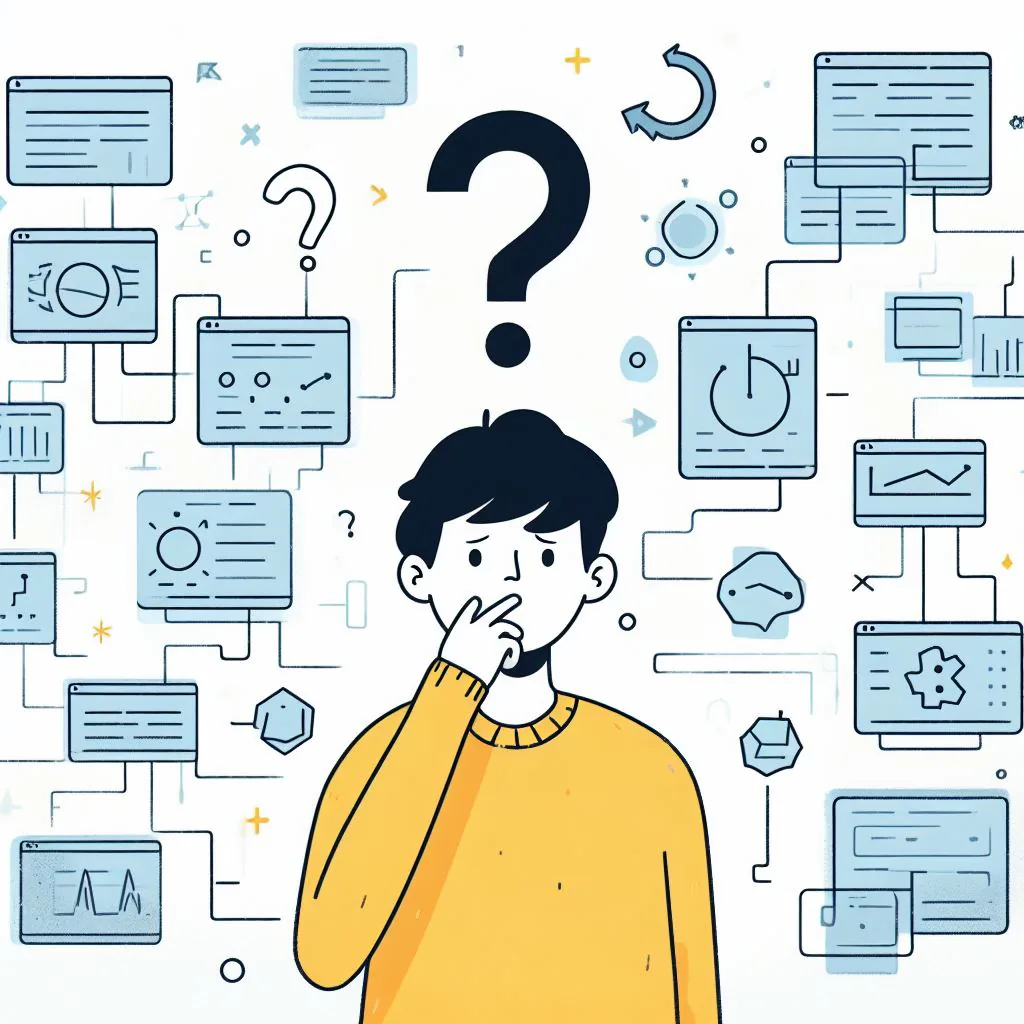
Simple Analytics vs. Plausible vs. Umami vs. PiwikPro vs. Fathom Analytics: Choosing the Right Analytics explains a practical website optimization topic.
VWO Growth plan costs $665/mo billed annually at 100K MTU ($7,980/year). Pro is $1,336/mo. Free Starter plan is being discontinued.
Does A/B Testing Hurts Your Search Engine Optimization (SEO)? comes down to clean implementation: A/B testing should not harm SEO when search engines see.

VWO is discontinuing its free Starter plan. Mida is the closest replacement: 100,000 MTU free forever, visual editor, and GA4 integration—no credit card required.
The 95% confidence interval is the A/B testing standard because it balances a 5% false-positive risk with practical sample sizes. Using 99% wastes traffic; dropping to 90% ships too many losers. Here's why 95% is the default.
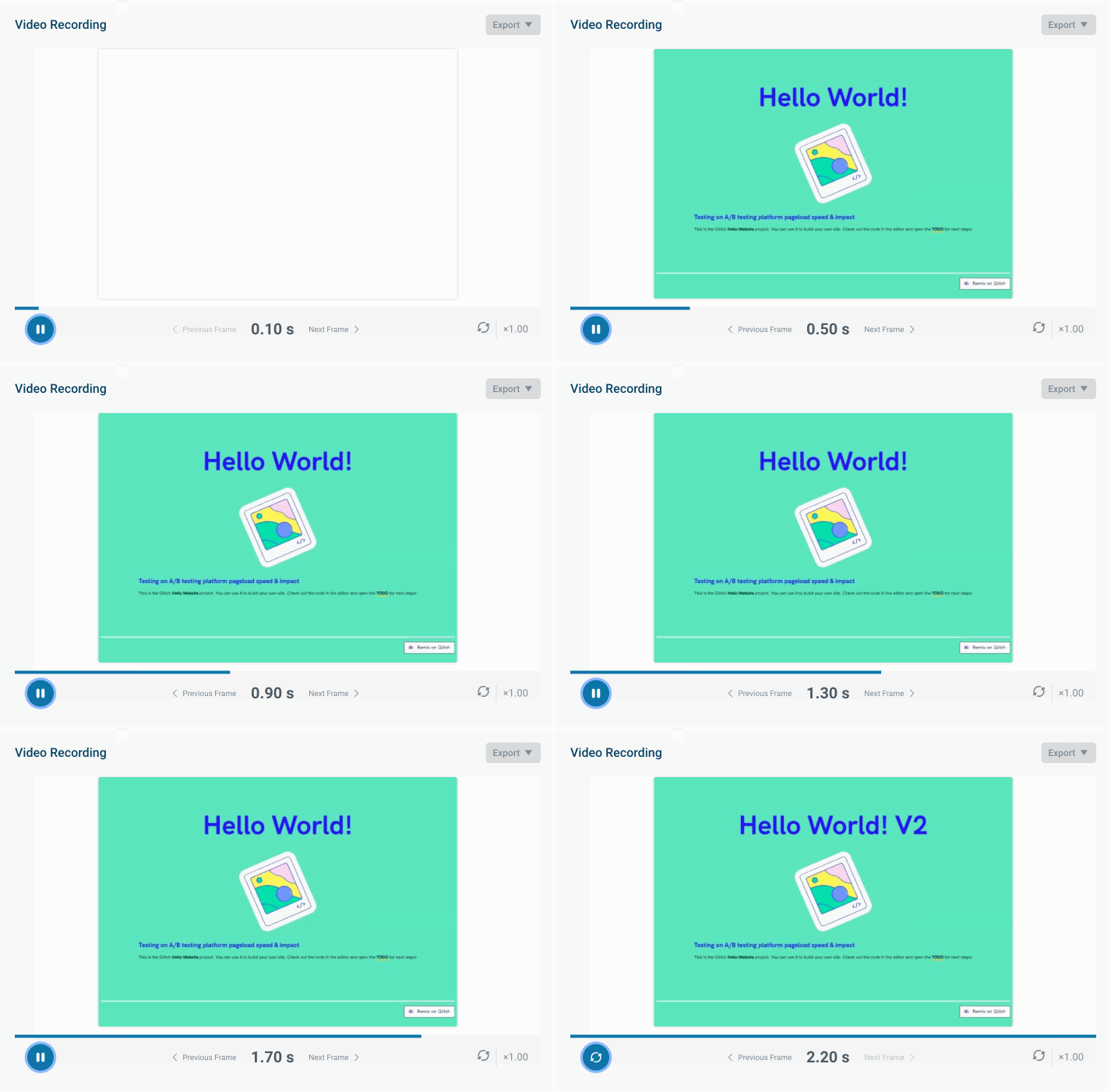
Anti-flickering scripts hide content until the variant loads, which can hurt LCP. Learn how anti-flicker works, what causes it, and how to minimize the performance trade-off.
AB Tasty doesn't publish pricing — custom quotes start around $1,000–$3,000/month for mid-market. Mida offers transparent pricing from $299/month plus a 100K MTU free tier.
How much monthly traffic you need to start A/B testing depends on baseline conversion rate, expected lift, and volume. Sites without enough traffic can still compare designs with synthetic users in Mida Synthetic A/B.
How to Split Test Collection Page Redesigns? is mainly about reducing purchase friction and validating changes with measured experiments.

Run A/B tests for at least one full business cycle and until you hit your pre-set sample size. Learn how to calculate minimum test duration and why stopping early is dangerous.
Optimizely starts around $36,000 a year. But most A/B tests do not win, so what decides whether any testing tool pays off is cost per winning test.
What is A/B Testing in Digital Marketing? With Practical Examples is about comparing controlled variations so teams can make website decisions from.
How to analyze and interpret A/B testing results? (with video tutorial) is about comparing controlled variations so teams can make website decisions from.

A complete breakdown of the four ecommerce metrics that actually drive revenue decisions — AOV, CR, RPV, and GMV — with 2026 industry benchmarks, improvement tactics, and guidance on which metric to use as your A/B test primary.
Demand Generation vs. Lead Generation: Why Your A/B Tests Need a Different Goal for Each is about comparing controlled variations so teams can make.
Your Website Is Losing Leads. Here Are 10 Tests to Run Before You Scale Ads explains a practical website optimization topic for growth and conversion.
The B2B SaaS Demand Gen Stack: Where A/B Testing Really Fits is about comparing controlled variations so teams can make website decisions from visitor.
What Is Peeking in A/B Testing and Why You Shouldn’t Peek! is about comparing controlled variations so teams can make website decisions from visitor.

High ticket digital marketing targets premium buyers with authority content, long nurture sequences, and demo calls. Get the 2026 funnel strategy and channel playbook.

Shopify Integrations: Complete Guide for Shopify Stores is mainly about reducing purchase friction and validating changes with measured experiments.

B2B sales involves longer cycles, multiple decision-makers, and larger deal sizes than B2C. Learn the full process, proven strategies, key metrics, and common mistakes for 2026.

A strong CTA is specific, action-oriented, and reduces friction. See 17 real examples across SaaS, ecommerce, and content — plus a formula for writing CTAs that convert.
Canary testing rolls out new features to 1–5% of users first to catch bugs before a full release. Learn the deployment strategy, monitoring thresholds, and best practices.

Conversion rate optimization improves website revenue by helping more visitors complete valuable actions through research, testing, and UX improvements.

Direct to Consumer (DTC): What is It, Strategies, Example D2C Ecommerce Brands is mainly about reducing purchase friction and validating changes with.

Ecommerce Payment Systems (2026): How Online Payments Work Securely is mainly about reducing purchase friction and validating changes with measured.
Ecommerce Sales Funnel Essentials: Stages, Metrics, and How To Create One is mainly about reducing purchase friction and validating changes with measured.
Ecommerce SEO For Beginner comes down to clean implementation: A/B testing should not harm SEO when search engines see a stable canonical page, tests.
Frequentist A/B testing uses p-values and fixed samples; Bayesian updates probability continuously. Learn the key differences, trade-offs, and which to use for your experiments.

Funnel hacking is the practice of reverse-engineering competitors' sales funnels — ads, landing pages, and email sequences — to model proven structures for your own offers.

Effective Google ad copy matches search intent, leads with the benefit, and uses keywords in the headline. Learn the structure, character limits, and patterns that drive CTR.

High ticket sales require longer cycles, multi-stakeholder buy-in, and consultative selling. Learn the strategies, frameworks, and objection-handling tactics to close premium deals.

Inside sales is remote selling via calls, email, and video — no in-person meetings. Learn the full process, key metrics like quota and ACV, strategies, and common mistakes.
Interpreting Statistical Significance in A/B Test Results depends on baseline conversion rate, expected lift, and traffic volume.

Learn the 4 core functions of marketing management, how to build a data-driven strategy, and real frameworks used by growth teams in 2026.

A complete guide to marketing strategy: what it is, the main types (SaaS, e-commerce, DTC, B2B, content), how to build one in 8 steps, and real brand examples from Nike, HubSpot, and Glossier.

Learn how to use the Meta Ad Library to spy on competitor ads, check active ads count, filter by country, and find winning creative in 2026.

A microsite is a focused standalone web experience for a campaign, product, or audience, often used to improve message relevance and conversions.
In A/B testing, two-tailed tests are almost always correct — they detect both lifts and drops. One-tailed tests need ~20% less traffic but miss harmful variants. Learn which to use by default and when one-tailed is justified.

PPC optimization improves Quality Score, ad relevance, and landing page alignment to lower CPC and raise ROAS. Get the complete campaign optimization checklist.
What are the differences between personalization and simple A/B testing? is about comparing controlled variations so teams can make website decisions from.
Price testing uses A/B experiments to find the price point that maximizes revenue — not just conversions. Learn how to run price tests safely, legally, and without alienating customers.

What Is Product Placement? Strategy, History, Types & ROI is mainly about reducing purchase friction and validating changes with measured experiments.

Psychological Pricing: Guide to Pricing Tactics Using Psychological Principles explains a practical website optimization topic for growth and conversion.

SaaS marketing covers free trials, product-led growth, content, and lifecycle campaigns. Learn the key aspects, strategies, and a full example plan for 2026.

A sales strategy defines how your team finds, qualifies, and closes deals. Learn the proven frameworks — inbound, outbound, account-based — and how to build a repeatable playbook.

Share of Search measures brand demand vs competitors using search volume data. Learn how to calculate SoS, why it predicts market share, and how to improve it.
Frequentist A/B testing is simpler to audit; Bayesian works better for continuous monitoring and early stopping. Learn how to choose the right method for your team and traffic volume.

Statistical Power: Definition, Formula & Practical Guide to Power Analysis depends on baseline conversion rate, expected lift, and traffic volume.

Website marketing turns your site into a revenue channel using SEO, CRO, paid traffic, and content. Get the complete strategy with channels, tactics, and an example plan.

In A/B testing, a Type I error (false positive) ships a losing variant; a Type II error (false negative) kills a real winner. Learn how significance level, sample size, and peeking affect both error rates.
In A/B testing, A is the control (original) and B is the variant (the change being tested). Learn how to structure a valid test, what to change, and how to measure results.
A hero image is the dominant visual above the fold. See high-converting examples, best practices for file size and LCP, and A/B testing ideas for your homepage hero.
The control group sees the original version in an A/B test and serves as your baseline. Learn how to set it up correctly, size it, and prevent contamination from other tests.
Feature flags let you turn features on or off for specific users without redeploying. Learn how they work, how to use them for canary releases and A/B tests, and key pitfalls.

What is Click-Through Rate (CTR)? How is it different from Conversion Rate (CR)? explains a practical website optimization topic for growth and conversion.

Macro and micro conversions help CRO teams track primary goals and smaller intent signals across the customer journey.

Micro conversions are smaller user actions that signal intent before a primary conversion, such as signup, cart, or purchase.

AI A/B testing uses AI to generate test variants and shift traffic to winners automatically. Mida is an AI-powered A/B testing tool via MidaGX.

Exploration tests new variants to discover winners; exploitation scales what already works. Learn how to balance both using the multi-armed bandit framework in A/B testing.
What Are The Differences Between Split Testing and A/B Testing? is about comparing controlled variations so teams can make website decisions from visitor.
A/B testing splits traffic between a control and variant so you can measure the real impact of a change before making it permanent. This guide covers the full process.
User testing reveals why visitors behave a certain way; A/B testing measures whether a change improves outcomes at scale. Learn when to use each and how to combine both methods.
Mida uses a lightweight 15KB compressed script so your experiments can move fast without weighing down your site.

Mida.so is a super lightweight A/B testing tool to help you experiment, analyze and implement conversion strategies in minutes.


Still deciding?
A quick screen share on your actual site — no slides, no generic tour. Just your questions answered.
30 min · no commitment · no sales pressure